Trezirea
Who makes trailers for coffee?
I always found that strange, because specialty coffee has more story packed into it than most of the things we make a fuss over. Behind a single lot there is a farm and the person who picked it, a processing method that was half craft and half gamble, and a roaster making fifty small decisions to land a flavor that only exists for one season. There is a real story in every bag, and almost every roaster buries it under a label that reads like chemistry homework.
So part of why I built Trezirea was simply to come up with a solution for that, to treat each lot we release like it deserves the attention, because it genuinely does, and that turned out to be a big chunk of the idea.
The problem nobody admits they have
If you have ever opened a specialty roaster's shop you already know the feeling, because there are a dozen beautiful bags all shouting different origins and altitudes and washed-versus-natural, and you have no real way of knowing which one is for you, so you scroll through all of them, get a little overwhelmed, and then close the tab and never come back. You do not pick the wrong one, you simply do not pick at all, and you quietly go back to the supermarket stuff because at least that decision is already made for you. That is choice paralysis, and the specialty world made it worse almost by accident, because the more it leaned into being precise and serious, the more it quietly turned buying a bag of coffee into a small exam you never signed up for.
Then there is freshness, which is the quiet killer that almost nobody mentions, because coffee is not wine and it does not improve with age. It peaks within a few weeks of roasting and then slowly fades into the brown, tired stuff that most people genuinely believe coffee is supposed to taste like, and the supermarket bag you picked up was very likely roasted months ago, which means you have been drinking a memory of what it once was.
Underneath both of those sits quality, which is the part you cannot fake no matter how good the branding is, because you either source good green coffee and roast it with care or you do not, and most of the convenient options simply do not. Trezirea is my attempt to solve all three of these at once, so that the coffee is genuinely good, it arrives fresh because it ships close to roast, and you never have to agonize over the choice because the choosing is handled for you. Good coffee shows up, you drink it, and that is the deal.
The trailers
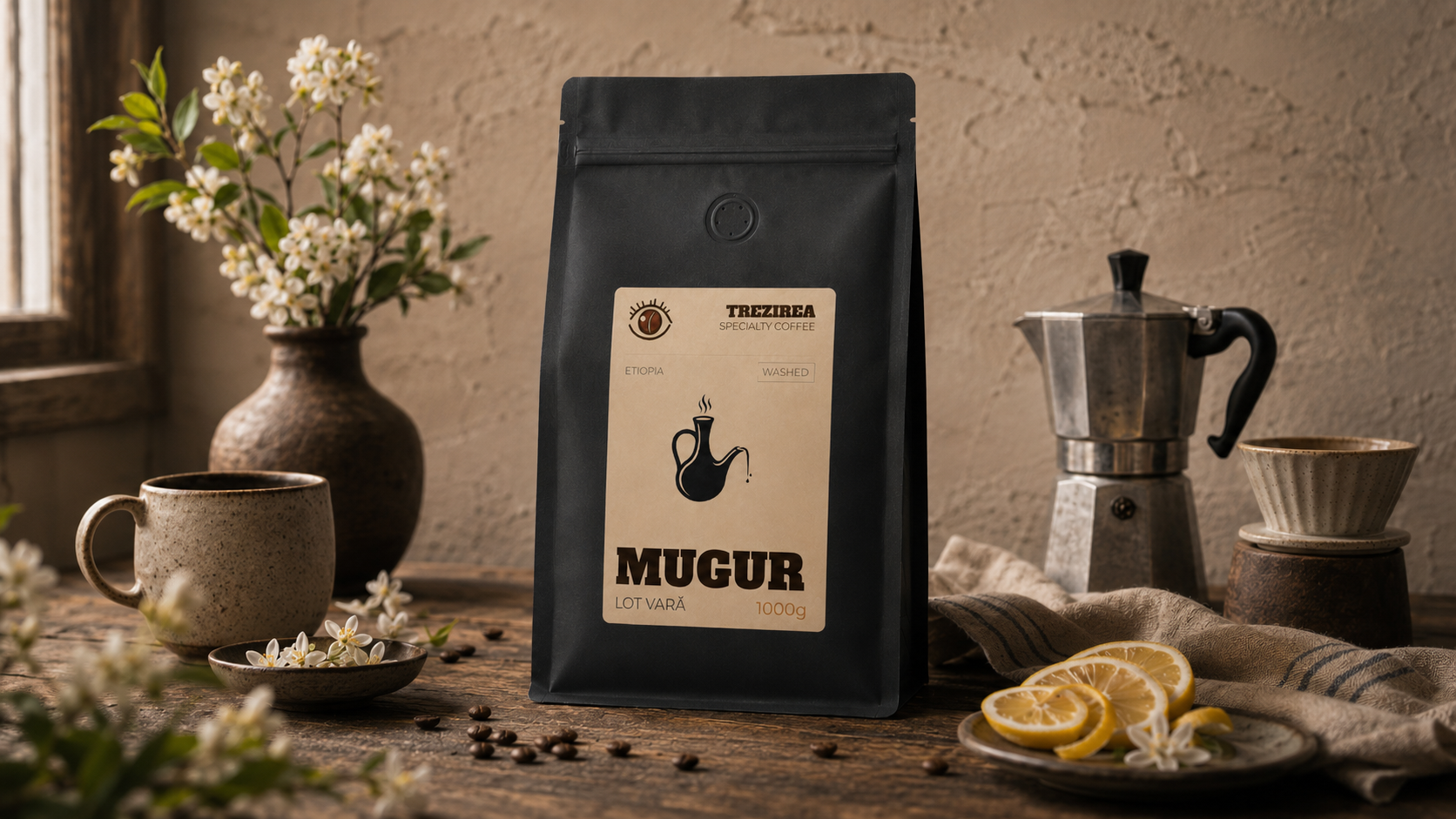
This is the part I will want to have the most fun with, and it is also the part that makes Trezirea feel like its own thing rather than another roaster with a nice logo. Every lot gets a proper release rather than a product page, and I mean that as more than a turn of phrase. The current summer lot is Mugur, an Ethiopia Yirgacheffe from Sigiga, washed, and it arrives with a story and a build-up in the same way anything else worth caring about does, and the Burundi lot landing in autumn will get exactly the same treatment; hopefully with an even more enticing and exciting trailer.
Naming the lots was a deliberate choice rather than decoration, because Mugur means bud, the first sign of something opening up, which is precisely what a summer coffee should feel like when you pour it. A coffee is not a SKU sitting in a catalog, it is a season and a place and a moment that will not come back next year, since next year's harvest is genuinely a different thing, and treating each release like it matters is not marketing fluff but simply being honest about what the product actually is. People remember the coffee they had a story about, and they forget the one that came in the bag with the altitude on it.
Where the AI fits
I will keep this brief, because it is a tool rather than the point. I run Trezirea solo on top of a lot of other things, so the parts that would normally need a small team are the parts I handle with AI in the loop, whether that is drafting the release copy, shaping the visual direction for each lot, working through the naming, or pulling together the scraps of origin research that make a story actually land. The AI never decides what is good, it just lets one person move at the speed of several, which is the only reason a brand this deliberate can exist without a marketing department behind it. If you are curious how I build these things, do subscribe because I will keep writing and releasing more posts and hopefully more projects to share with the community.
Trezirea is one of the more enjoyable cases precisely because the constraint was never the engineering but caring enough to do the boring parts well at a scale one person can actually sustain.
Why do this?
Honestly, because I wanted it to exist. I wanted coffee I could trust to be good and that I did not have to think about, that respected the thing in the bag enough to tell me where it came from without making me feel like I needed a certification to understand it, and since I could not find that anywhere I went and made it. That is the same reason behind most things I build, where the gap is annoying enough that fixing it ends up feeling better than complaining about it.
Trezirea is live, the summer lot Mugur is open now, and if the idea of coffee that gets a proper release instead of a label sounds like your kind of thing, come and see what a trailer for a bag of beans actually looks like.
PS: Delivery and orders are available only in Romania. That's the only way one can keep one of the core tenets of the product. But who knows? Maybe in a future, it might come to more countries.
Subscribe to get the latest updates
Member discussion